Savory Homestyle Stuffed Cabbage Rolls
Tender cabbage leaves wrapped around a seasoned ground beef and rice filling, braised in a rich savory glaze. A comforting, healthy classic perfect for family dinners.

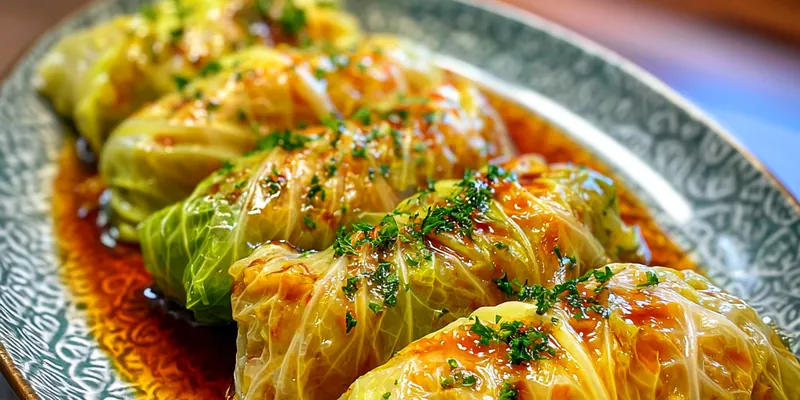
Preparing the Leaves
The most intimidating part of making cabbage rolls is prepping the leaves without tearing them. The trick is to boil the whole head of cabbage after removing the core. As the hot water penetrates, the outer leaves will naturally pull away from the head, remaining pliable and intact.
Once the leaves are removed, shaving down the thick central stem at the base of each leaf is crucial. This ensures the roll cooks evenly and makes the rolling process much smoother, preventing the leaf from snapping when you try to fold it.
💡 Professional Tip
If you have leftover cabbage heart after peeling the large leaves, chop it up and place it at the bottom of your pot. It prevents the rolls from burning and adds extra veggie goodness to the dish.
Frequently Asked Questions
Yes, for this recipe, use pre-cooked or par-boiled rice. Using raw rice requires significantly more liquid and cooking time, which can result in overcooked, mushy cabbage leaves.
Absolutely. A mix of pork and beef is traditional and adds more fat/flavor. Ground turkey or chicken works well for a lighter version, and ground lamb adds a wonderful distinct taste.
Place them seam-side down in the pan and pack them snugly against each other. The weight of the rolls and the tight packing keeps them secure while simmering.
Yes! Swap the meat for a mixture of mushrooms, lentils, and walnuts, and use vegetable broth for the glaze. The texture and umami flavor will still be fantastic.
Yes, cabbage rolls freeze very well. You can freeze them cooked (in sauce) or raw. Thaw in the refrigerator overnight before reheating or cooking.
Since they contain meat and rice, they are a meal in themselves. However, they pair beautifully with mashed potatoes to soak up the sauce, or crusty rye bread.
Likely, the cabbage wasn't blanched long enough before rolling, or the simmer time was too short. Cabbage needs time to break down and become buttery tender.
If you use tamari instead of soy sauce and ensure your beef broth is certified gluten-free, the entire dish is gluten-free (cornstarch is naturally GF).
Recipe Troubleshooting Guide
Leaves Tearing
Problem: Cabbage leaves rip while rolling
Solution: The leaves aren't soft enough or the stem is too thick. Blanch longer and use a paring knife to shave the thick rib flat.
Filling is Dry
Problem: Meat inside feels tough and dry
Solution: Use ground beef with at least 15-20% fat content. Lean meat dries out. Also, don't over-mix the meat paste, which can make it rubbery.
Watery Sauce
Problem: Sauce is too thin after cooking
Prevention: Remove the rolls, turn up the heat, and let the sauce reduce for 5 minutes, or add a cornstarch slurry to thicken it up immediately.
Burnt Bottom
Problem: Rolls burned on the bottom of the pan
Recovery: Heat was too high or not enough liquid. Simmer on low/medium-low and check liquid levels halfway through. Use chopped cabbage leaves as a bed.
Rice is Mushy
Problem: Rice texture is too soft inside
Prevention: Use slightly undercooked (al dente) rice for the filling, as it will absorb more moisture from the meat and cabbage during the braise.
Flavor Adjustments
Too Sweet: Add a tablespoon of brown sugar to the sauce
Too Salty: Add a splash of water or unsalted tomato puree
Bland: Add more garlic powder, paprika, or a splash of Worcestershire sauce
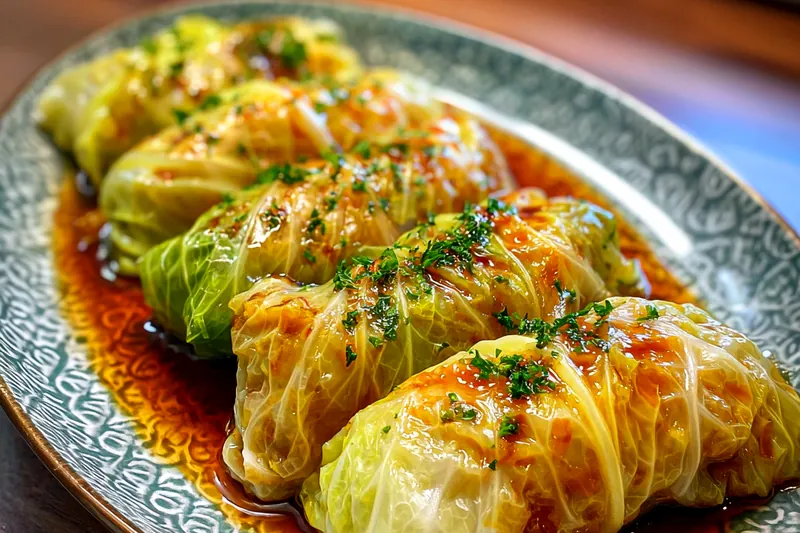
Choosing the Right Cabbage
While standard green cannonball cabbage is the most common choice, Savoy cabbage is an excellent alternative. Savoy has crinkly, tender leaves that are more pliable and sweeter than regular green cabbage, making them easier to roll and faster to cook.
When buying your head of cabbage, look for one that is heavy for its size but has relatively loose outer leaves. A super tight, dense head will be harder to peel without tearing. Avoid flat-headed varieties as the leaves are often difficult to separate intact.
Essential Ingredient Notes
- Rice Choice: Short-grain or medium-grain rice works best as it is stickier and helps hold the filling together. Long-grain rice can result in a crumbly filling.
- Beef Fat Ratio: Stick to 80/20 or 85/15 ground beef. The fat renders out and flavors the rice and cabbage, keeping the interior juicy.
- Fresh Parsley: Don't skip the fresh herbs. Parsley adds a necessary brightness to cut through the rich, savory meat and cabbage flavors.
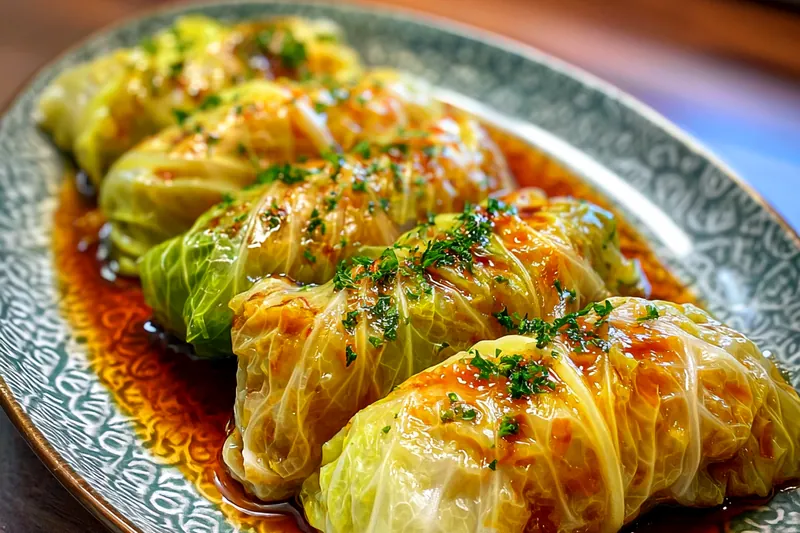
The Braising Method
Braising—cooking slowly in liquid with the lid on—is the secret to meltingly tender cabbage rolls. This method steams the cabbage from the outside while the liquid bubbles up and flavors the rolls. It creates a gentle heat environment that cooks the meat evenly without drying it out.
Don't rush the process. If you increase the heat to boil rapidly, the agitation can cause the rolls to unwrap and the cabbage to become mushy rather than tender. A gentle, steady simmer is key to maintaining the structural integrity of the rolls.
The Stem Shave
Use a small paring knife to shave the thick exterior rib of the cabbage leaf flat. Do not cut it out completely (creating a V-slit) unless necessary, as a solid leaf is easier to roll.
Savory Homestyle Stuffed Cabbage Rolls
📋 Ingredients
The Rolls
- 350ml beef brothBase for the savory sauce
- 30ml soy sauceAdds color and umami depth
- 15ml tomato pasteFor richness and body
- 1 tsp sugar or honeyBalances the acidity
- 1 tbsp cornstarchOptional, for thicker glaze
The Savory Glaze
- 1 large head green cabbageBlanched leaves for wrapping
- 500g ground beef80/20 blend preferred
- 250g cooked white riceShort or medium grain
- 1 medium onionFinely chopped
- 1 large eggBinder for the filling
- 2 cloves garlicMinced
- 1 tbsp paprikaFor subtle spice and color
Instructions
Prepare Cabbage
Bring a large pot of salted water to a boil. Carefully remove the core of the cabbage. Place the whole head in boiling water for 5-7 minutes until outer leaves soften. Peel off 10-12 large leaves and trim the thick rib from the bottom of each leaf.
Make Filling
In a large bowl, combine ground beef, cooked rice, chopped onion, minced garlic, egg, paprika, salt, pepper, and parsley. Mix by hand until ingredients are evenly incorporated.
Roll the Cabbage
Place about 1/3 cup of filling at the base of each cabbage leaf. Fold the sides in, then roll tightly from the bottom up (like a burrito).
Prepare Sauce
In a bowl or jug, whisk together beef broth, soy sauce, tomato paste, and sugar/honey. If you prefer a thicker glaze, whisk in the cornstarch now.
Cook
Place rolls seam-side down in a large deep skillet or Dutch oven. Pour the sauce over the rolls. Cover and simmer on low heat for 40-45 minutes, basting occasionally, until cabbage is tender and meat is cooked through. Garnish with fresh herbs before serving.
Recipe Notes & Tips
Storage
Store leftovers in an airtight container in the fridge for up to 4 days. The flavor often improves the next day! Reheat gently on the stovetop or in the microwave.
Serving Suggestions
Serve alongside creamy mashed potatoes or crusty bread to soak up the savory glaze. A dollop of sour cream on top is a traditional and delicious addition.
Variations
For a sweeter profile, add raisins or cranberries to the filling. For a spicy kick, add red pepper flakes to the sauce or use hot paprika in the meat mix.